What Does Window Replacement Actually Involve?
Replacing a window is not just swapping glass. It is removing a component that has been sealing your wall against Toronto weather for two or three decades, checking what the water has been doing behind it, and rebuilding the opening so the new unit performs the way its rating sheet says it should.
Toronto Quality Windows supplies and installs vinyl, casement and triple-pane systems across the Greater Toronto Area. As window and door replacement specialists in the GTA, every product we quote is certified to Energy Star Zone C, the rating band that matches Toronto’s Climate Zone 6 winters. Every installation is carried out by our own in-house crews and complies with CSA A440, the Canadian standard covering window performance and installation.
Most homeowners come to us for one of three reasons: the heating bill has crept up year after year, there is a cold draft along the floor near the glass, or the original builder-grade units have simply reached the end of their service life. All three point back to the same handful of components: the glazing package, the frame, and the quality of the seal between the window and the wall.
What’s Inside a Modern Window
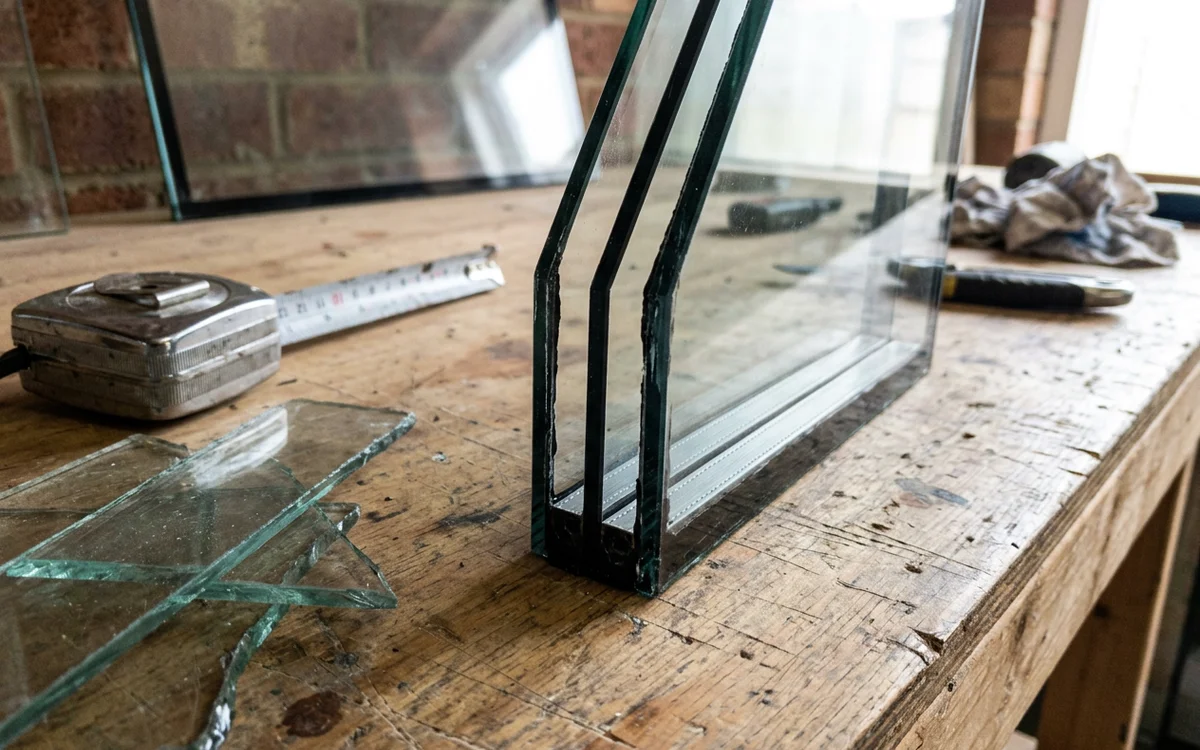
The insulated glass unit (IGU) is the sealed sandwich of glass panes that does the insulating work. Between the panes sits an argon gas fill, which conducts heat far less readily than air. Holding the panes apart is a warm-edge super spacer, which replaced the old aluminium spacer bars that used to conduct cold straight through the perimeter of the glass and cause condensation on the edges.
At least one surface of the glass carries a Low-emissivity (Low-E) coating, a metallic layer thinner than a wavelength of light that reflects long-wave heat back into the room in winter. Two numbers describe the result. U-factor measures how fast heat escapes: lower is better, and our triple-pane systems reach as low as 0.14. Solar heat gain coefficient (SHGC) measures how much of the sun’s heat gets through, which matters on south and west elevations where summer overheating is the concern rather than winter loss.
Retrofit or Full-Frame? How We Decide
There are two honest ways to install a replacement window, and the right answer depends on the condition of the opening, not on which one is more profitable to sell.
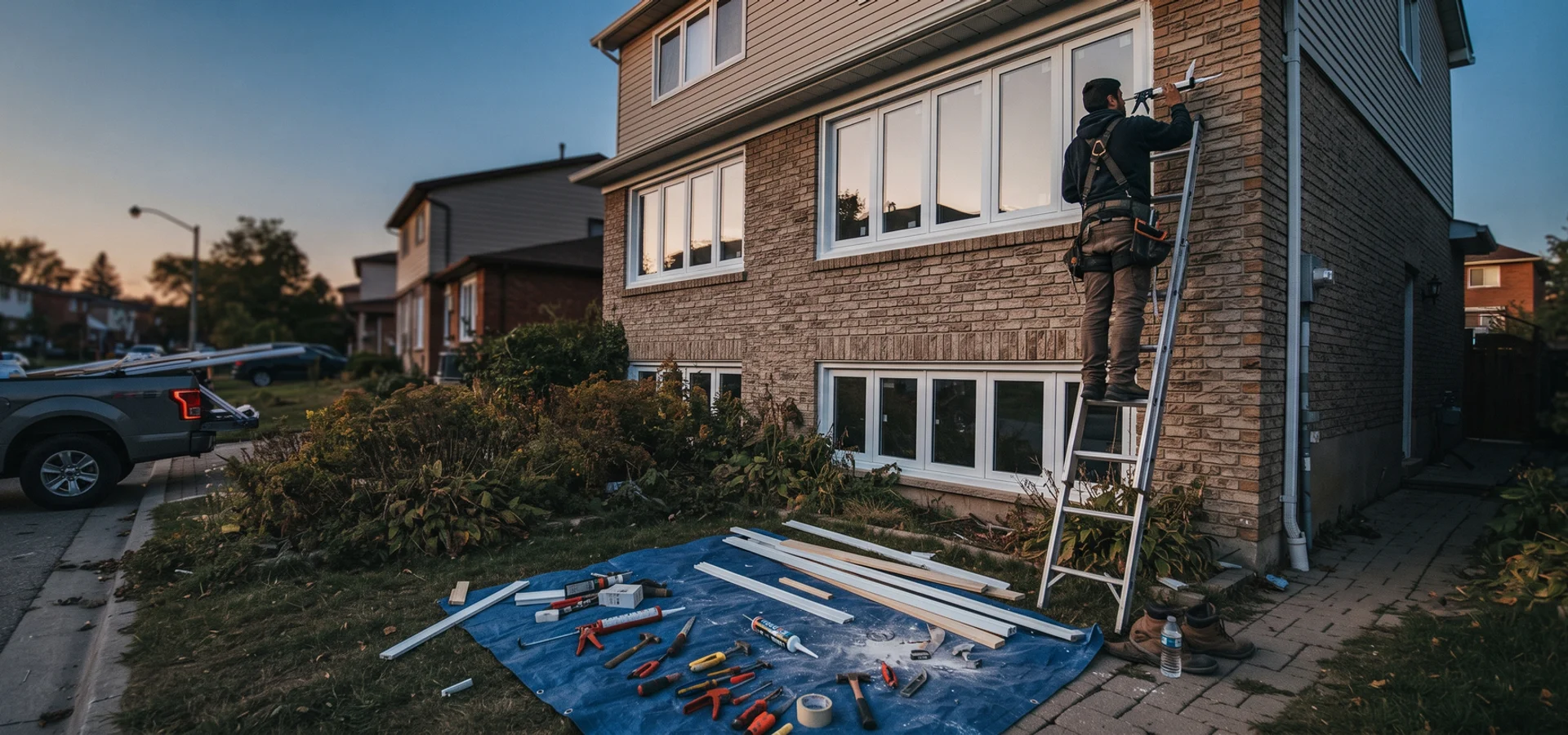
Retrofit installation, also called an insert, fits the new unit inside the existing frame. The exterior brick, capping and interior trim stay untouched. It is faster, cleaner and less expensive, and it is the correct choice when the existing frame is square, dry and structurally sound. Most 1980s and 1990s GTA homes with intact frames fall into this category.
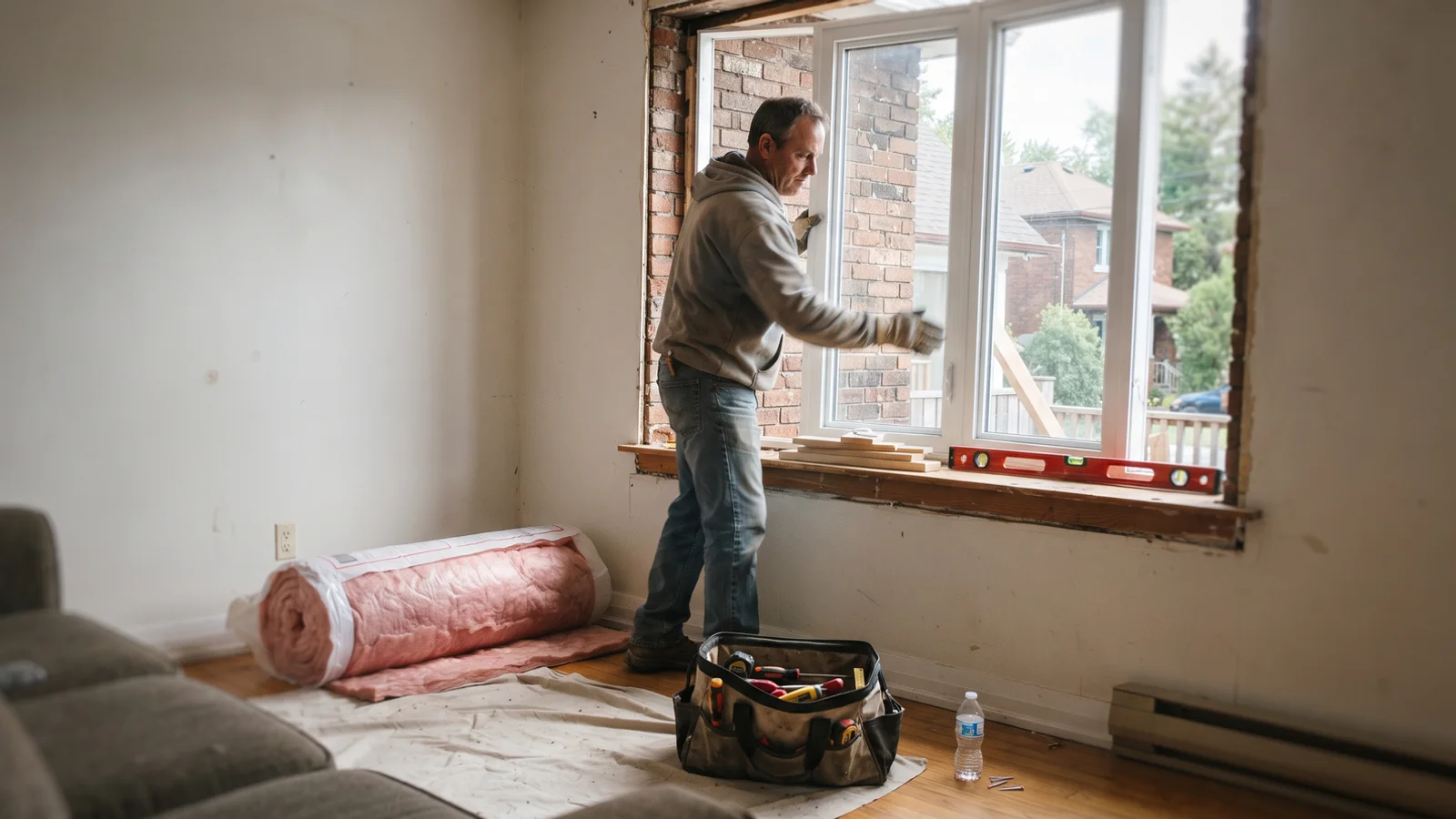
Brick-to-brick installation, also called full-frame, removes the entire old window including the frame, back to the structural rough opening. That exposes the sill, the sheathing and whatever moisture has been doing behind the trim for the last twenty years. We then re-flash the sill, insulate the perimeter properly, set the new unit, and finish both the exterior capping and the interior return.
Full-frame costs more, typically around 25% above a retrofit for the same window. It is the right call when there is rot at the sill, water staining on the interior trim, visible gaps where the frame has racked, or when the original wood buck has failed. Sealing a new window over a rotting frame hides the problem for a few years and then costs you twice.
At the measurement visit we tell you which method each opening needs and put it in writing. Sometimes it is mixed: full-frame on the weather-beaten west elevation, retrofit everywhere else.
Common Problems We Solve
Cold drafts along the floor
Air leakage through worn weatherstripping and racked sashes is the most common complaint we hear. It’s also the one that responds fastest to replacement, because a properly sealed modern unit with compression weatherstripping eliminates the pathway entirely.
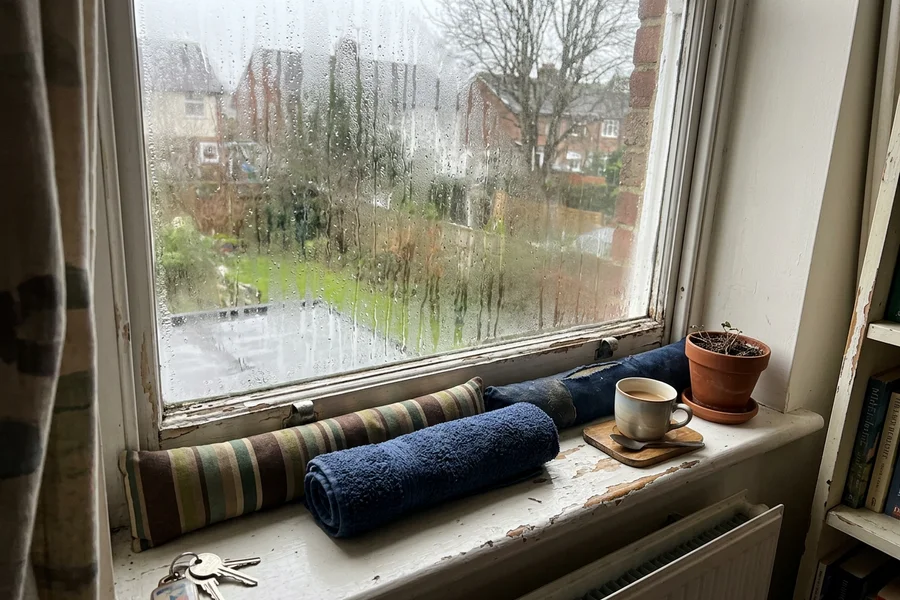
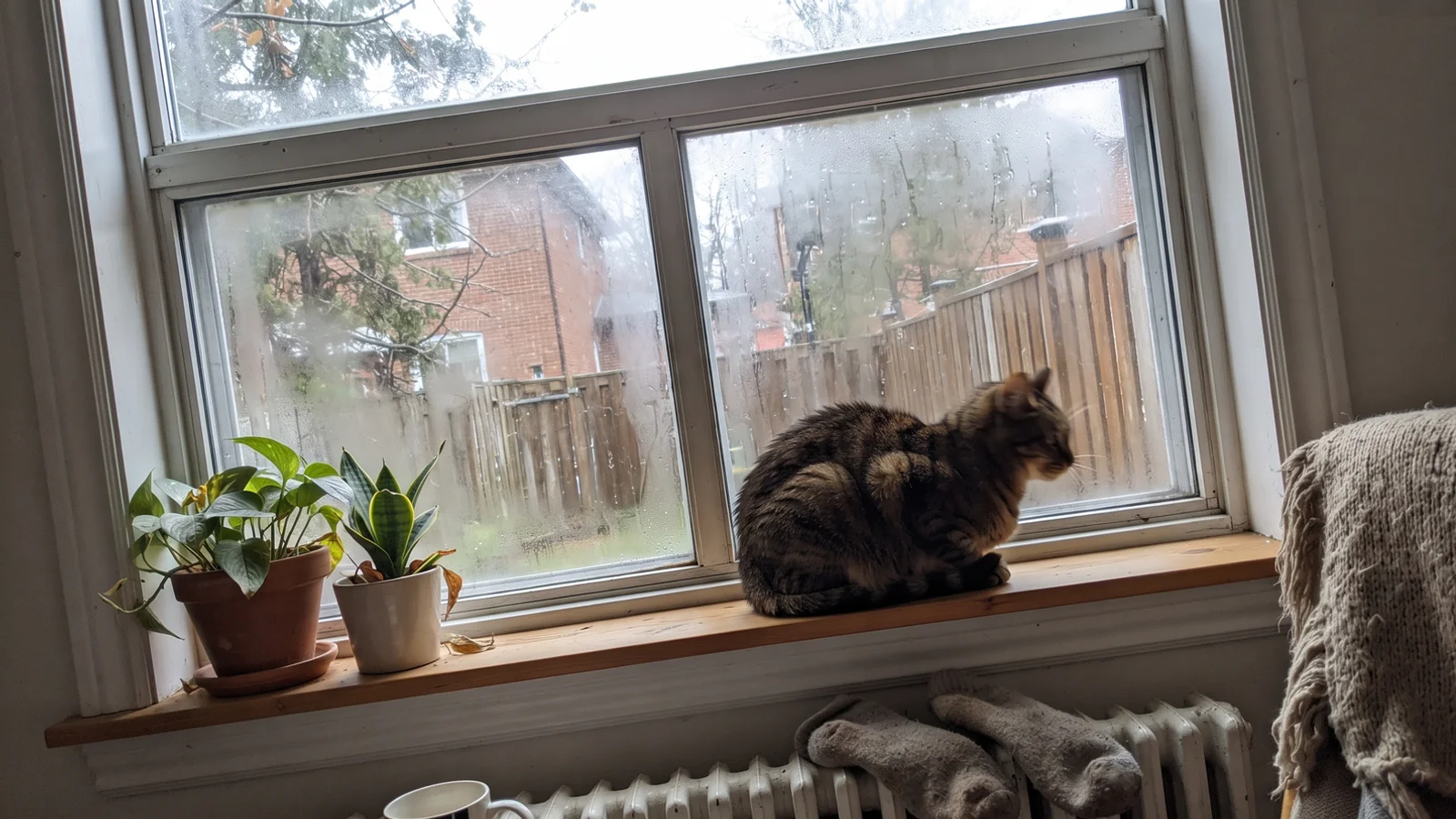
Condensation and frost on the inside of the glass
When the interior glass surface drops below the dew point, moisture forms. On a single-pane or failed double-pane window in January this is inevitable. Triple glazing with a warm-edge super spacer raises the surface temperature enough that the problem usually disappears.
Heating bills climbing every winter
Windows are one of the largest single sources of heat loss in a typical GTA home. Where original 1980s units are still in place, replacing them is usually the highest-impact envelope upgrade available short of re-insulating the attic.
Windows that stick, sag or won’t lock
Hardware wears and vinyl sashes sag over time. When the lock no longer engages cleanly, the compression seal isn’t closing either, which means the window is leaking air even when it looks shut.
What Window Replacement Costs in the GTA
Vinyl windows run $600 to $1,200 per window installed. Moving to triple-pane adds roughly $900 to $1,800 per opening depending on size. A whole-home replacement across a typical GTA detached home lands between $8,000 and $18,000.
The variables that move the number are straightforward: how many openings, how large each one is, whether you’re specifying double or triple glazing, and whether the opening needs retrofit or brick-to-brick installation. Custom shapes such as arched heads, bay assemblies and oversized picture windows sit at the upper end.
Because our installations are Energy Star Zone C certified, they qualify for the Canada Greener Homes Grant and Enbridge HER+ rebates, subject to a registered energy assessment before and after the work. The sequence matters and getting it wrong costs you the rebate, so we walk through it during the quote rather than after.
Book a Free In-Home Measurement
We measure every opening, check the frame and sill condition, and leave you with itemised pricing per window and a stated install method. There is no charge and no obligation, and the visit takes about 45 minutes for a typical home. If a window repair makes more sense than a full replacement, we’ll tell you that too.