What a New Entry Door Actually Changes
An entry door does three jobs at once, and an old one usually fails at all three together. It’s the most visible element on your facade, it’s the primary point of forced entry, and it’s a hole in your building envelope that has to seal against a Toronto winter every night.
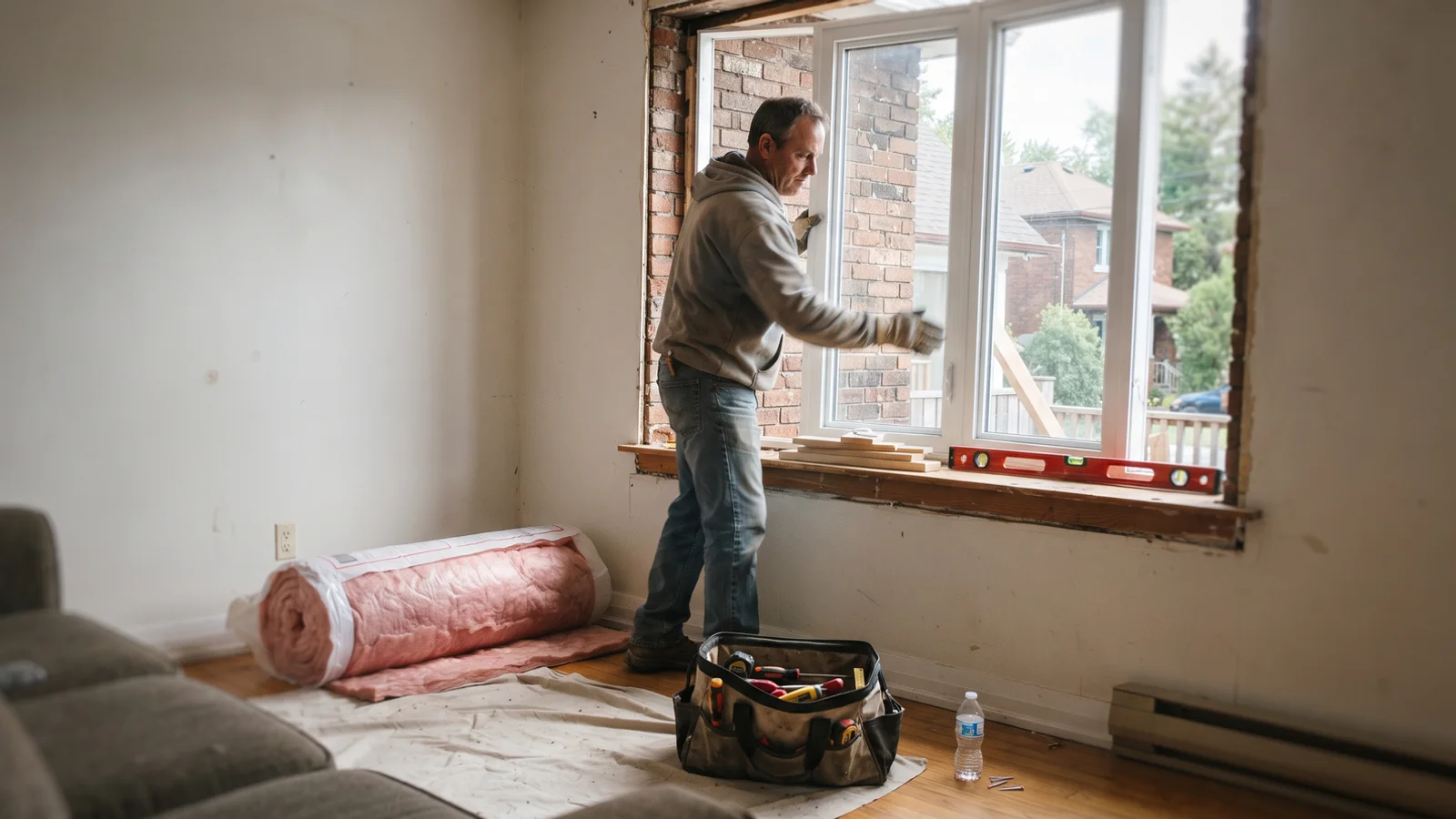
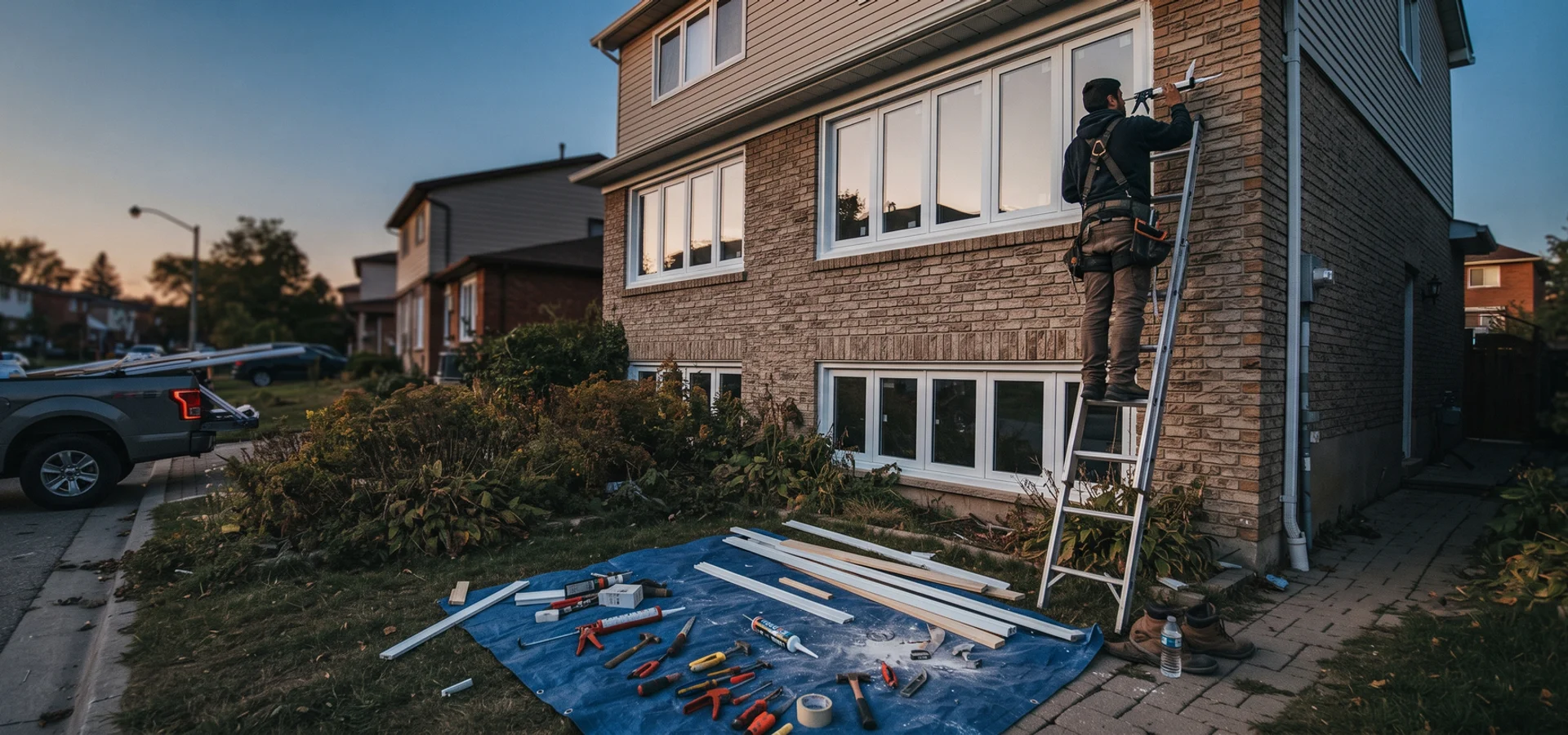
We install steel and fiberglass entry doors across the Greater Toronto Area, fitted by the same in-house crews that handle our window and door replacement work across the GTA. Most replacements are complete in a single day: old unit out in the morning, new frame set, sealed, finished and locking properly by late afternoon.
Steel or Fiberglass?
Steel skin doors are the value choice. An insulated foam core between two steel skins gives you strength and thermal performance at the lowest cost, and modern factory finishes hold up well. The weakness is denting and, over many years, corrosion at the bottom edge where road salt and meltwater collect.
Fiberglass composite slabs cost more and last better. They don’t dent, don’t rust, and hold paint and stain finishes through the freeze-thaw cycles that punish a Toronto entrance. They can also be moulded with a convincing woodgrain texture, which is why most of our stain-finish entrances are fiberglass. On a west or south-facing entrance taking full weather and sun, we’d usually recommend it.
Either way, we replace the complete unit: frame, slab, threshold and hardware. Hanging a new slab in a twenty-year-old frame leaves you with the original weatherstripping, sill and strike plates, which are typically the parts that failed first.
Security: Hardware That’s Actually Anchored
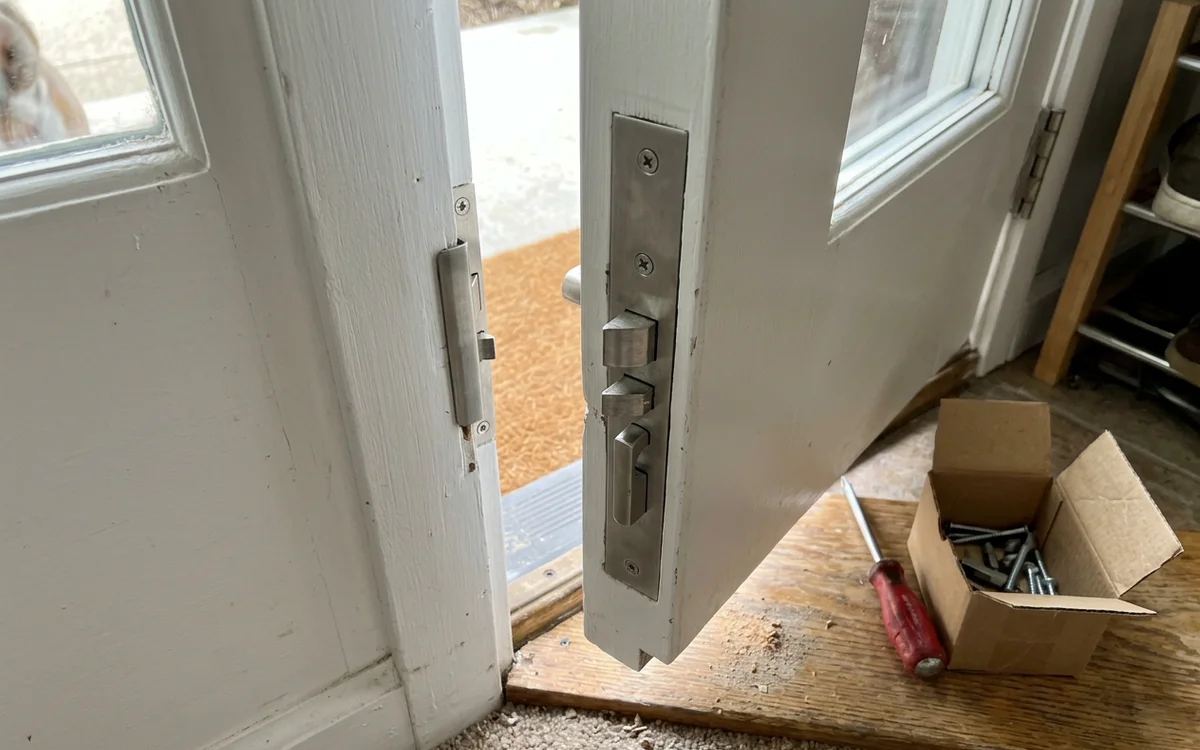
A deadbolt is only as strong as what it engages. A multi-point locking system throws bolts at several points up and down the door edge from a single handle or key turn, so a pry bar has to defeat the whole edge rather than one point. It also pulls the slab evenly into its weatherstripping, which is why multi-point doors tend to seal better as well as resist better.
Heavy-duty strike plates matter just as much. A strike plate screwed into the jamb with 20mm screws will tear out of the trim under a single hard kick. Ours are anchored with long screws that reach into the structural framing behind.
For entrances where glass sits close to the lock (sidelites, or a large decorative insert) we recommend laminated glass, and on higher-specification projects we can supply assemblies to an RC1 to RC4 rating, the European resistance classes that test frame, hardware and glazing together. That’s the same standard we apply to our European tilt-and-turn windows.
Common Problems We Solve
A draught you can feel across the hallway floor
Almost always the threshold. A standard aluminium sill conducts cold straight through from outside, and a worn bottom sweep stops compressing. A thermal break threshold interrupts that conduction path, and a properly set sweep restores the seal.
A door that sticks in summer and rattles in winter
Seasonal movement in a wood-framed or racked opening. Setting a new frame plumb, square and correctly shimmed fixes it permanently.
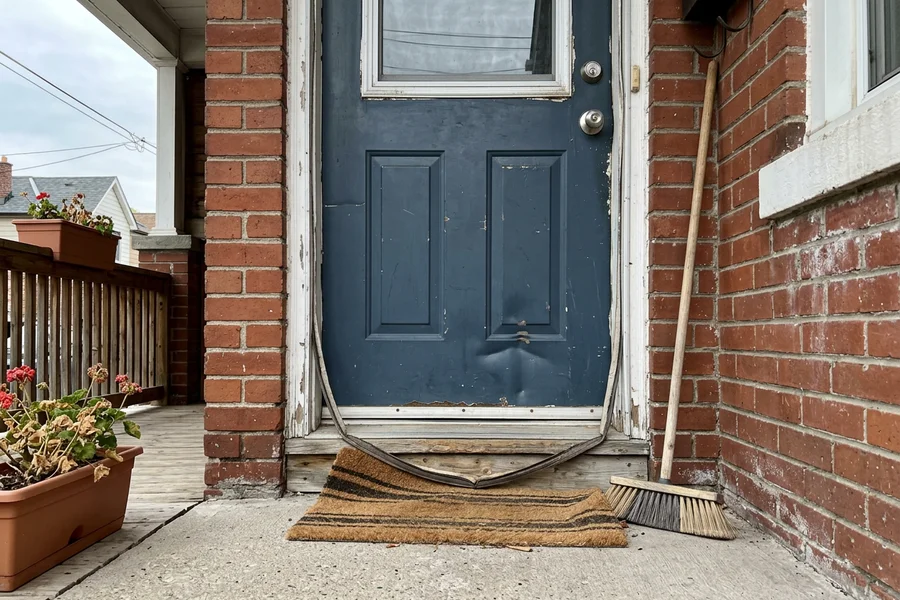
Peeling finish and a dented, dated slab
The most common reason people call. Curb appeal is a legitimate motivation. An entrance is the first thing anyone sees of the house.
Locks that need a shoulder to close
If you have to push the door to turn the key, the compression seal is fighting the lock. A correctly hung unit with multi-point hardware closes with one hand.
Design Options: Sidelites, Transoms and Glass
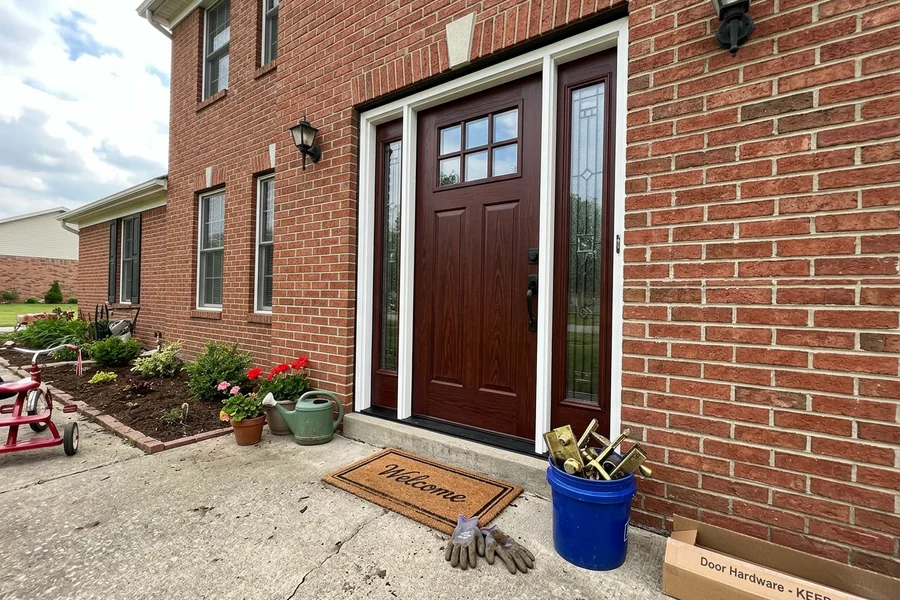
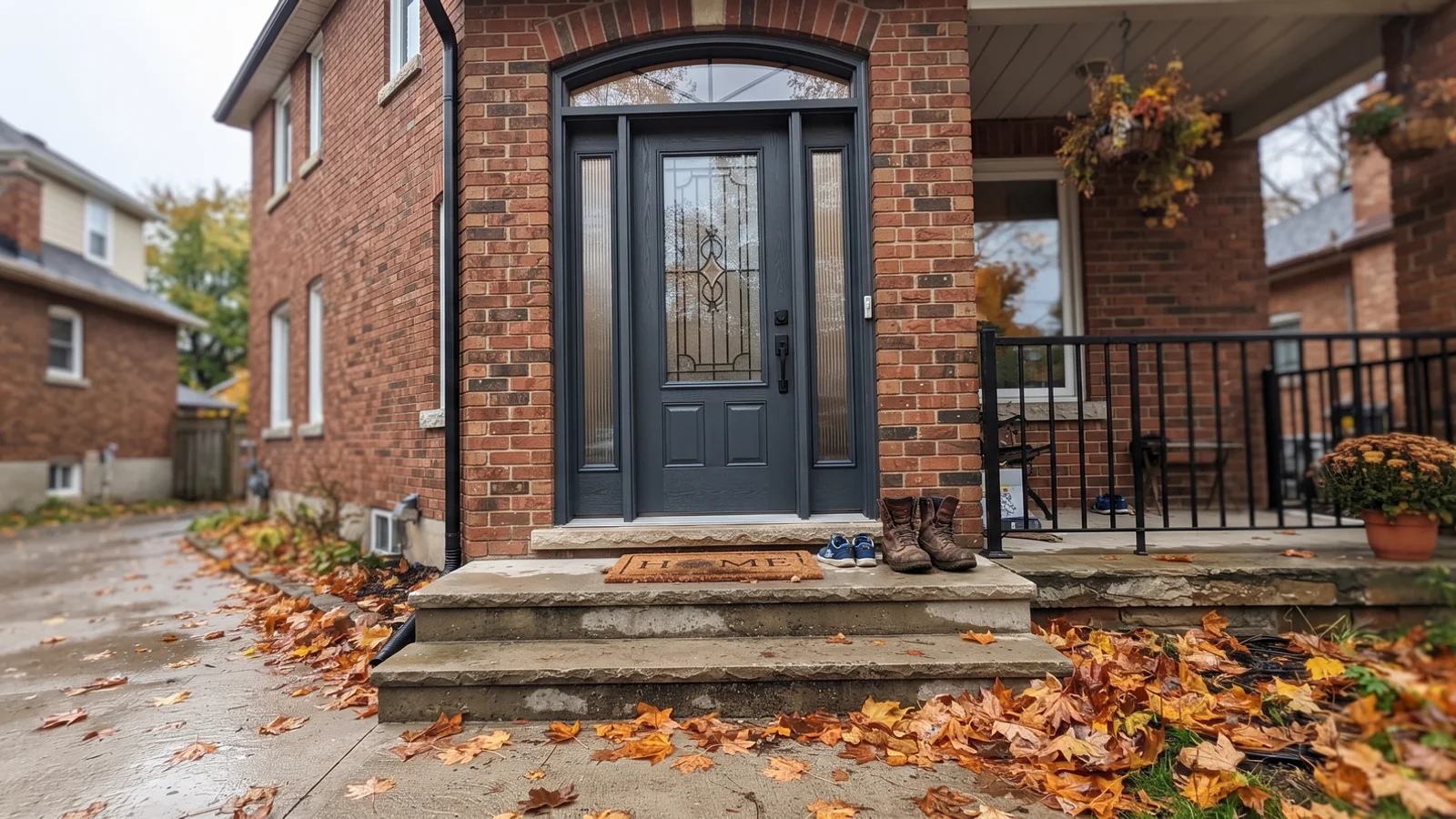
Sidelites are the narrow fixed panels either side of the slab. One or two, glazed to match the door. Transom windows sit above the door within the same assembly and are the easiest way to get daylight into a dark front hall without losing wall space.
Decorative glass inserts run from simple obscure and privacy patterns through leaded and wrought-iron style designs. All exterior glass is tempered or laminated safety glass.
Adding sidelites or a transom to an existing entrance means widening or heightening the rough opening, which involves the structural header. That’s planned at the measurement visit, not improvised on installation day.
Every installation finishes with custom aluminum jamb wrapping on the exterior and clean trim returns inside, included in the job, not a return visit.
What Entry Doors Cost in the GTA
Entry doors run $1,500 to $4,500 installed. A plain insulated steel slab in an existing opening sits at the bottom. A fiberglass door with one sidelite and a decorative glass insert lands in the middle. A full entrance system with two sidelites, a transom and upgraded security hardware sits at the top.
Every quote is itemised: slab material, glass, finish, hardware and lock type listed individually, so you can see what you’re paying for and adjust it.
Book a Free Entry Door Consultation
We measure the rough opening, check the sill and framing condition, and work through slab material, glass and hardware options with you on site. You’ll get a written specification and a fixed price, with no charge for the visit.