Interior Doors as Part of a Whole-Home Update
Interior doors are the detail people notice last and appreciate longest. Once the windows are done and the entry door has been replaced, tired hollow slabs with mismatched hardware are usually the thing that still makes a hallway look dated.
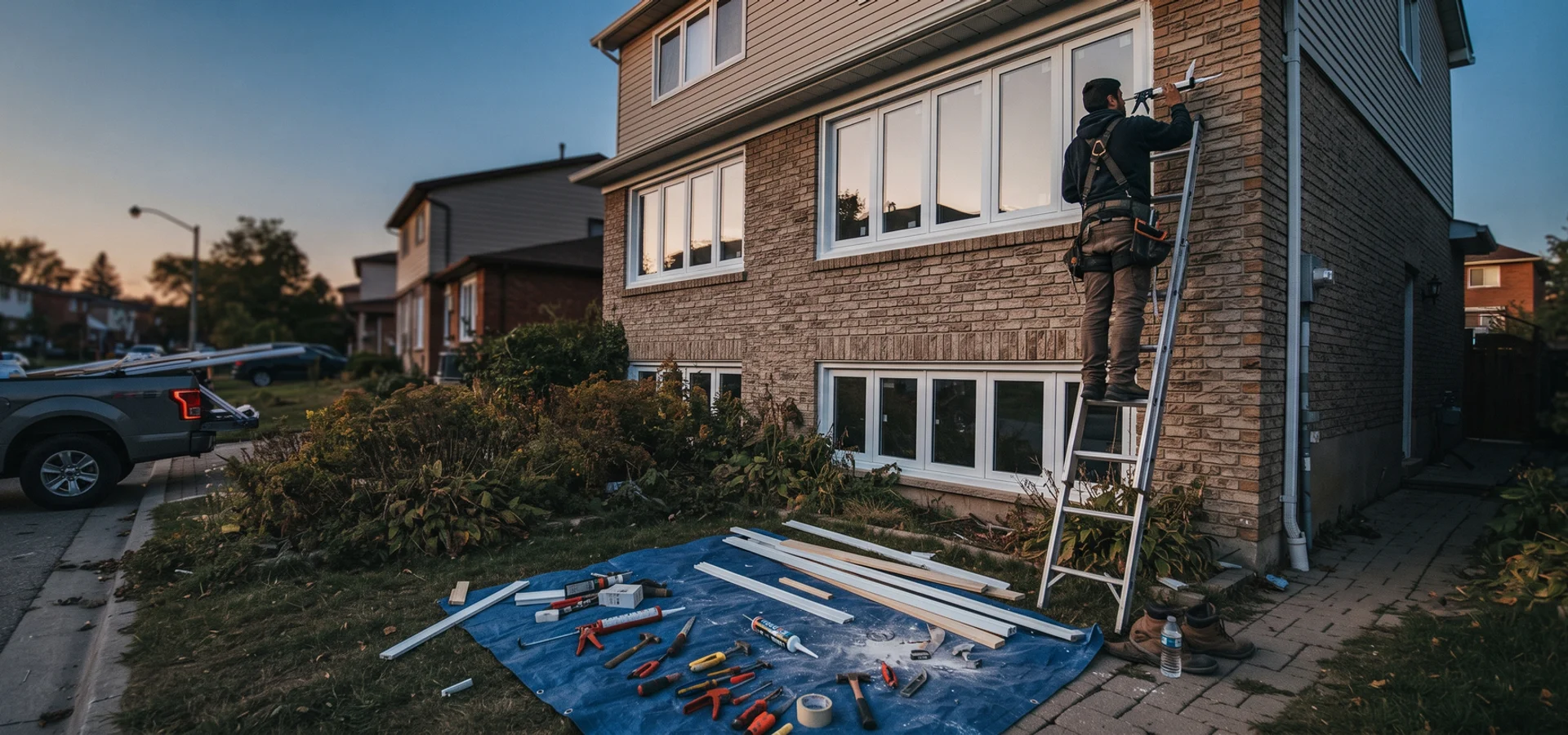
We supply and install interior doors across the Greater Toronto Area as part of larger window and door replacement projects, typically alongside window replacement or an entry door installation. Doing them together means one crew on site, one schedule, and finishes chosen as a set rather than matched afterwards.
Styles: Panel, Flush and Glass
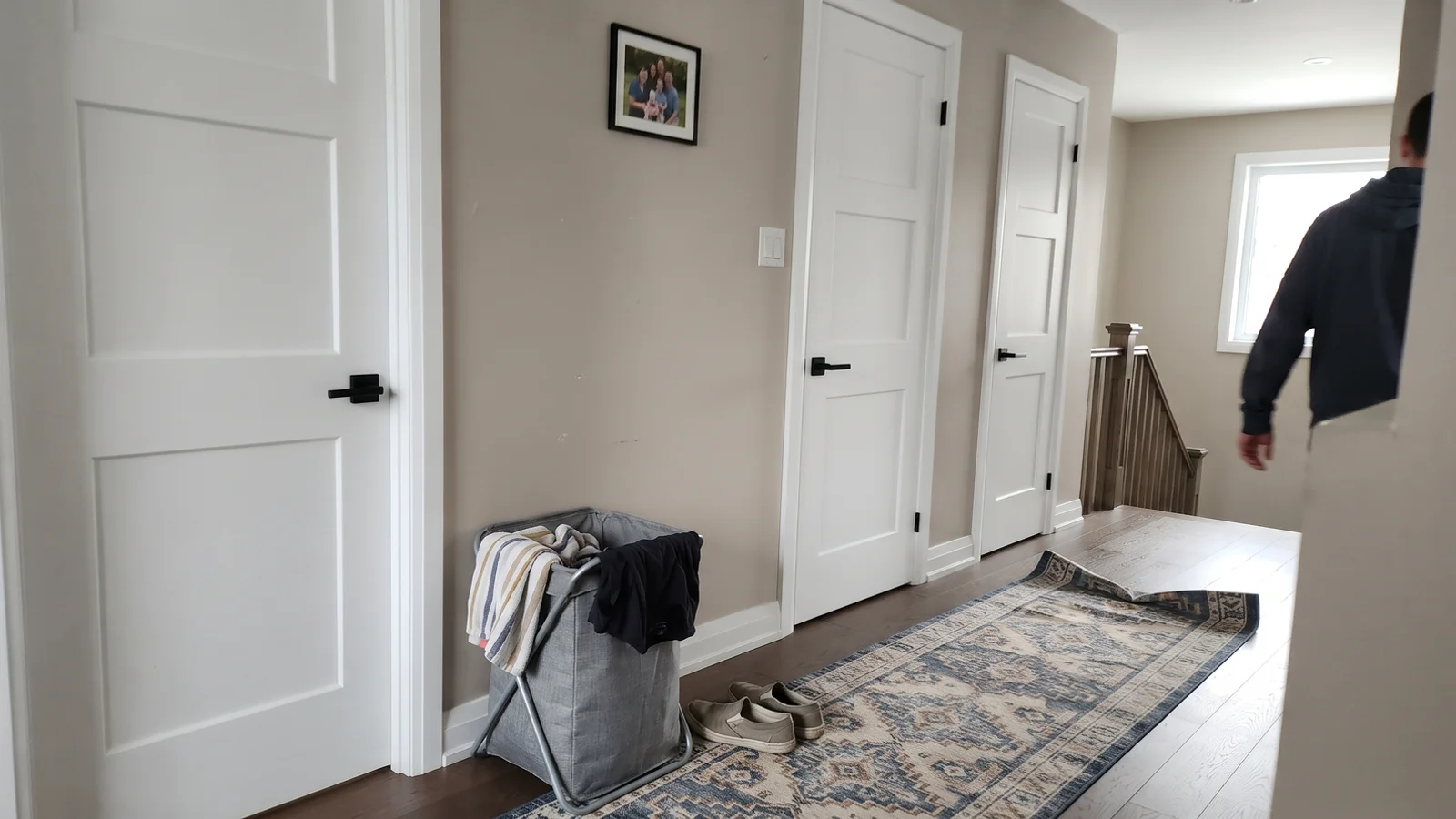
A panel door has a framed construction with recessed or raised panels. Shaker, two-panel and six-panel are the common profiles in GTA homes. Shaker reads clean and contemporary; six-panel suits traditional trim.
A flush door is a plain slab with no profile. In paint-grade it disappears into the wall, which suits minimal interiors; in a walnut or oak veneer it becomes a feature.
A glass-insert door carries a clear, frosted or reeded panel. These earn their place in interior rooms with no window (a basement office, an interior den) where borrowed daylight from the hallway makes a real difference without sacrificing privacy.
Solid-Core or Hollow-Core?
A hollow-core door has a light internal lattice between two facing skins. It’s inexpensive, light to hang, and completely appropriate for closets, pantries and linen cupboards.
A solid-core door has a dense composite core. It’s heavier, it feels substantially more solid to open and close, and it blocks noticeably more sound. Bedrooms, bathrooms and home offices are where that matters, and it’s where we’d recommend spending the difference.
Most homes end up with a mix, and there is nothing wrong with that. The visible door slab style stays consistent across the house while the core spec varies by room.
Common Problems We Solve
Doors that drift open on their own
The opening isn’t plumb, so the door swings toward gravity. Shimming the jamb correctly at installation fixes it permanently. Adjusting hinges is a workaround, not a fix.
Latches that never line up
Same root cause. When the jamb has racked, the latch and strike stop meeting. New pre-hung units set plumb solve it.
Sound carrying between rooms
Hollow-core slabs transmit sound readily. Swapping to solid-core on bedrooms and offices is one of the cheapest acoustic improvements available in a house.
Mismatched hardware across the house
Decades of piecemeal replacement leaves three lever styles and two finishes in one hallway. Specifying interior door hardware as a set with the doors is the fix.
Coordinating With Your Main Project
Because interior doors are scheduled around your window or entry door installation, the crew is already on site and the finish decisions are made once. Pricing is presented per opening within the same written specification as the rest of the project, so you can see exactly what the addition costs and adjust the scope room by room.
Add Interior Doors to Your Quote
Mention interior doors when you book your free in-home measurement and we’ll include them in the same written specification: style, core type, finish and hardware listed per opening, coordinated with your new windows and entry door.