What Makes a Tilt-and-Turn Window Different?
Most North American windows do one thing. A slider slides, a casement cranks outward, a hung window goes up and down. Tilt-and-turn operation gives you two modes from one handle, and once you’ve lived with it the single-action alternative feels limited.
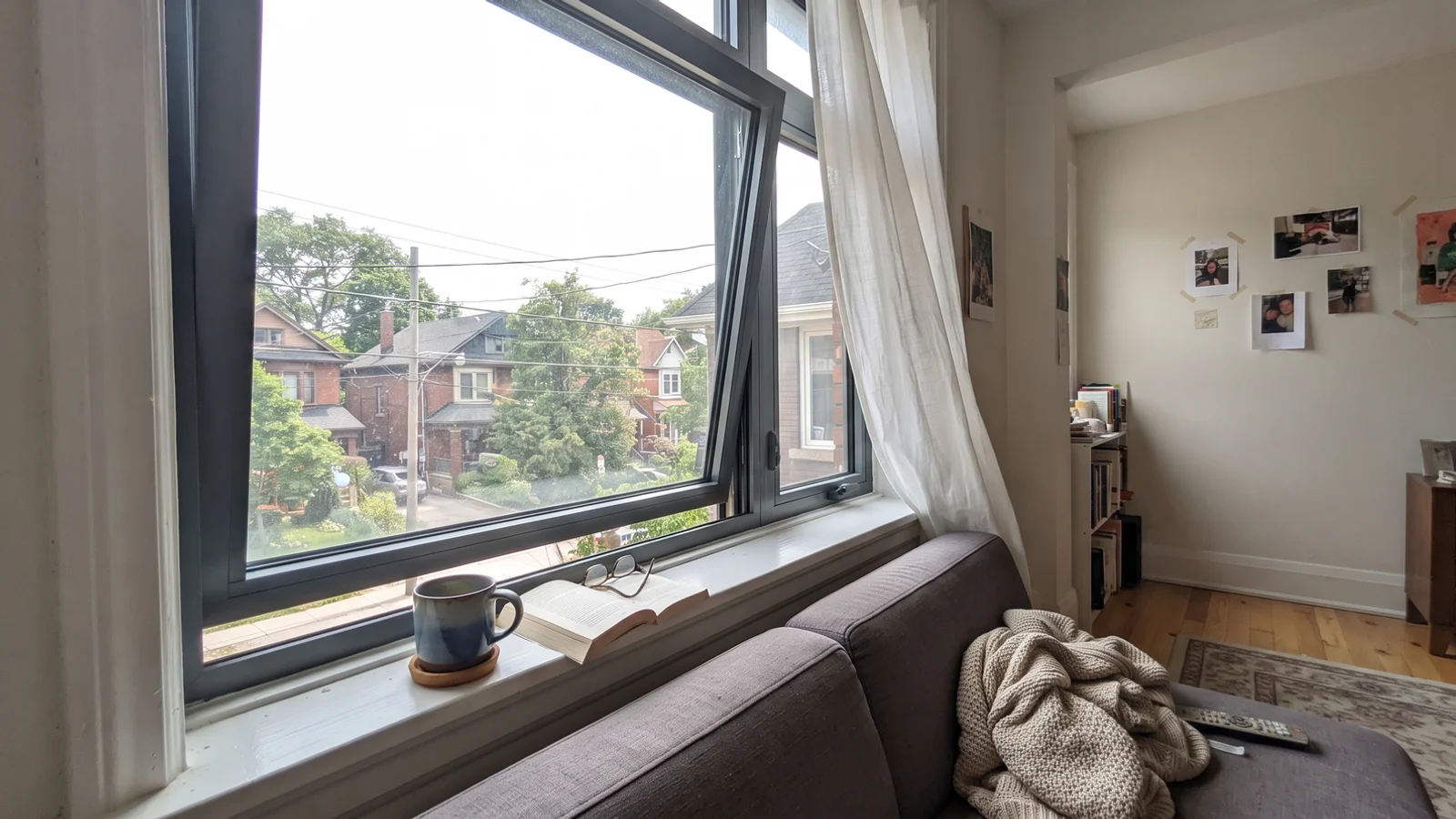
Rotate the handle 90 degrees and the sash tilts inward at the top, hinged along the bottom edge. That gives you secure background ventilation you can leave running while you’re out. The opening is too small and too awkward to climb through. Rotate the handle a further 90 degrees and the entire sash swings inward on a side hinge, giving you the full opening for airflow and, just as usefully, letting you wash the outside face of the glass from inside the room.
As authorized GTA dealers for Schuco, Reynaers and Cortizo, we supply and install these systems across Toronto and the surrounding municipalities, alongside the rest of our window and door replacement services in the Greater Toronto Area. They sit a clear step above the vinyl systems we install on window replacement projects, and they cost accordingly. This page explains where that money goes so you can decide whether it’s justified for your home.
Thermal Performance: Where 0.14 Comes From
Aluminium is an excellent conductor of heat, which makes it a terrible window frame material, unless you interrupt it. A thermal break is an insulating polyamide strip laminated between the interior and exterior aluminium profiles, so heat cannot travel directly through the frame. Thermally broken aluminum is the reason these systems work at all in Toronto’s Climate Zone 6.
Combine a thermally broken profile with triple glazing, dual Low-E coatings, argon gas fill and a warm-edge spacer and you reach a U-factor 0.14 on the best configurations. For comparison, a typical Energy Star double-pane vinyl unit sits around 0.28 to 0.30. That difference shows up as glass you can stand beside in January without feeling the cold radiating off it.
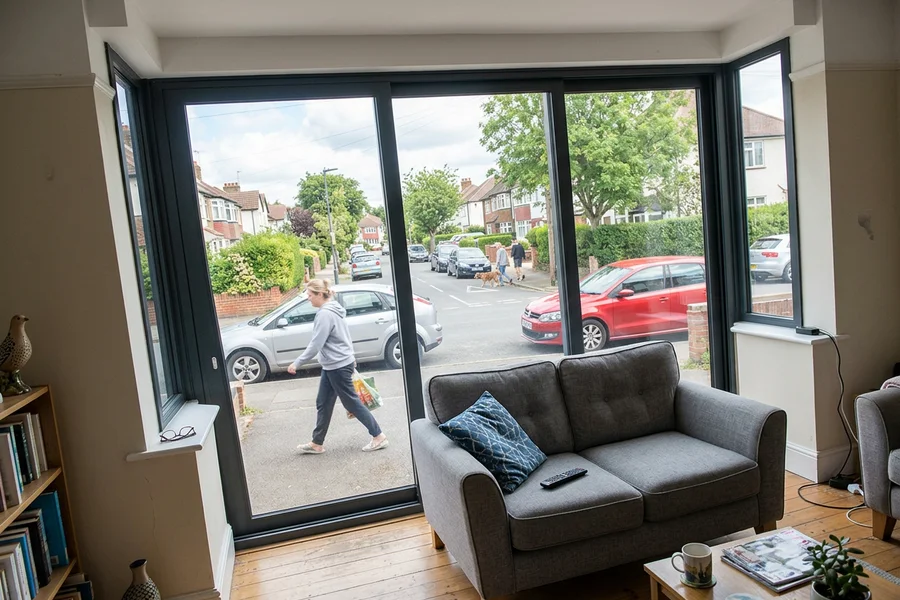
The other benefit of a stiff aluminium profile is structural. Slimline aluminum profiles carry more glass in less frame, so a wide opening reads as glass rather than as a grid of white plastic. On a rear elevation with three or four metres of glazing, that is the whole point.
Security: What RC Ratings Actually Test
Almost every window company claims their product is secure. RC1 to RC4 resistance class is a tested European standard that puts a number behind the claim, and it tests the assembly as a whole, not the parts in isolation.
| Class | Resists | Typical use |
|---|---|---|
| RC1 | Body force: shouldering, kicking | Upper floors, low-risk openings |
| RC2 | Simple tools: screwdriver, pliers, wedge | Accessible ground-floor windows and doors |
| RC3 | Heavier tools: crowbar, sustained attempt | Secluded lots, rear elevations |
| RC4 | Power tools and determined attack | High-security specifications |
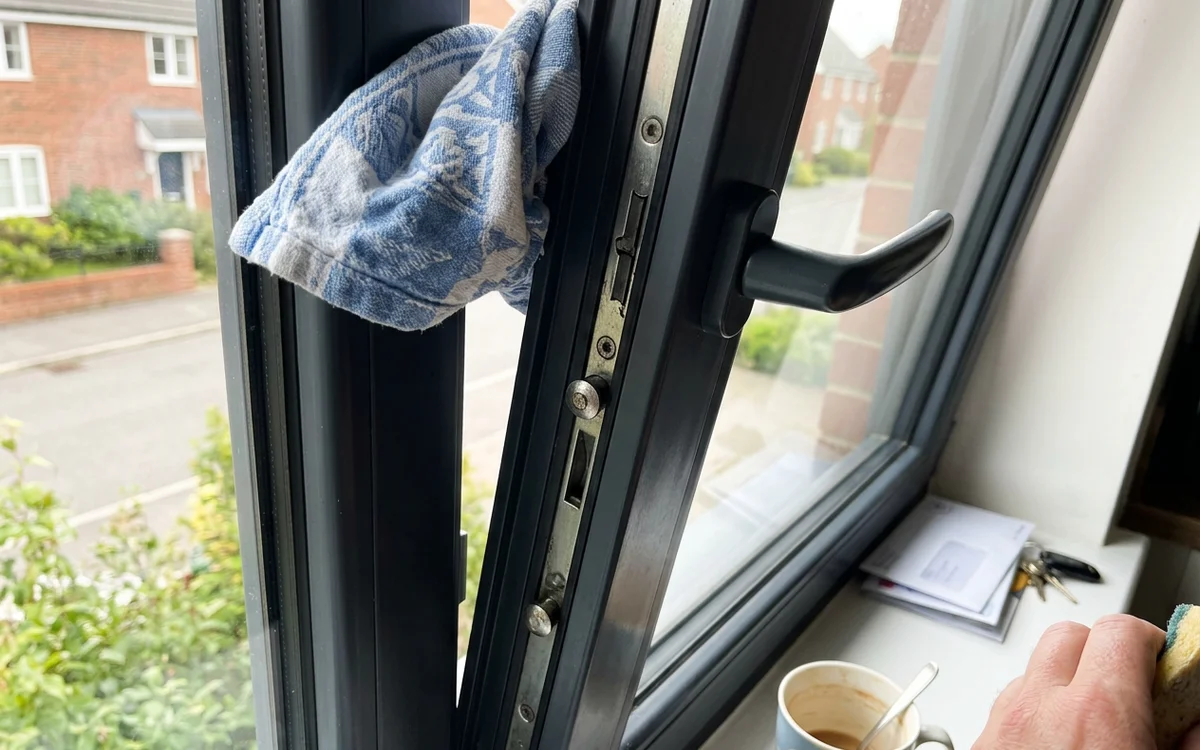
Three components have to work together to earn a class. A multi-point locking system with mushroom cams draws the sash tight into the frame at multiple points around the perimeter rather than at a single latch. The frame has to resist deflection under a pry bar. And the glazing is usually laminated security glass, two panes bonded around a plastic interlayer, so a strike cracks the glass but doesn’t open a hole.
For most GTA homes we specify RC2 on accessible ground-floor openings and standard hardware above. Richmond Hill, Vaughan and Oakville projects on larger or more secluded lots often step up to RC3 on the rear elevation.
Common Problems We Solve
Wide openings that look heavy in vinyl
Vinyl needs bulk to carry span. On a large picture window or a rear wall of glazing, the frame becomes a visual element whether you wanted it to be or not. Slimline aluminium fixes this.
Street and traffic noise
Laminated glass with an acoustic interlayer, combined with a compression seal drawn tight by multi-point hardware, cuts noise substantially compared with a single-latch slider.
Ventilation you can’t leave unattended
The tilt position gives real airflow with a small, high, awkward opening. It’s the practical answer for anyone who wants fresh air without leaving a window standing wide open.
Cleaning upper-floor exteriors
Turn the sash fully inward and both faces of the glass are reachable from inside. On a second or third storey that is a genuine safety improvement.
What European Systems Cost in the GTA
Triple-pane European tilt-and-turn windows are quoted per project, typically $900 to $1,800 per window and higher for oversized or architectural geometry. Adding an RC2 specification with laminated glass sits in the middle of that band; RC3 and RC4 assemblies sit above it.
Because these are manufactured to order, lead time, not crew availability, usually sets the schedule. We confirm the delivery date in writing before booking installation, so your openings are never sitting exposed waiting on product.
Where the specific product line carries Energy Star Zone C certification, the installation is eligible for the Canada Greener Homes Grant. We verify certification per product line rather than assuming, because not every European configuration is certified for the Canadian market.
Book a Free Consultation
We’ll review your elevations, talk through where slim sightlines and RC ratings actually earn their cost, and give you a written specification listing the profile system, glazing build-up, U-factor and resistance class for every opening. If a standard vinyl unit is the smarter buy on part of the house, we’ll tell you that.