Why Your Windows Have Gone Foggy
A modern window’s insulating work is done by the insulated glass unit (IGU): two or three panes held apart by a spacer bar and sealed around the perimeter. That cavity holds an argon gas fill, and at least one glass surface carries a Low-E glass coating. Sealed correctly, that assembly stays clear and efficient for two decades or more.
Thermal seal failure is what ends it. Every day the unit heats up, expands, cools and contracts. Over 15 to 25 years, faster on south and west elevations that take the most sun, the perimeter seal degrades. Once it breaches, the argon escapes and humid outdoor air moves in. The desiccant in the warm-edge spacer absorbs that moisture until it’s saturated, and then condensation starts forming on the inner glass surfaces where you can’t reach it. That’s the milky haze, and the white mineral staining that follows it.
The important part: the frame, the sash and the hardware are usually fine. Only the glass unit has failed. That is why a foggy window is often a repair rather than a replacement, and why we quote it as a glass swap before we quote it as one of our window and door replacement projects in the GTA.

Repair or Replace? The Honest Comparison
We quote both numbers and let you choose. Here’s how the decision usually goes.
| Situation | Recommended | Typical cost |
|---|---|---|
| Failed seal, frame sound, hardware good | Glass unit swap | $300 – $700 per unit |
| Drafty, sticking, won’t lock; glass fine | Hardware & seal repair | $150 – $450 per opening |
| Rot at the sill, racked frame, water staining | Full window replacement | $600 – $1,200 per window |
| Most of the house failed at once | Whole-home replacement | $8,000 – $18,000 |
A glass unit swap restores clarity and brings the U-factor back near its original figure, because the replacement unit carries the same Low-E coating, argon fill and warm-edge spacer specification as a new window. What it can’t fix is a worn frame, so if the sash has sagged past adjustment or there’s moisture damage in the buck, we’ll say that the money is better spent on window replacement instead.
Common Problems We Solve
Haze and staining between the panes
The classic failed IGU. We confirm it’s genuinely a seal failure rather than surface condensation, measure the sash rebate, and fit a new sealed unit.
Cold draft from a closed window
Almost always a compression problem. If the lock doesn’t fully engage, the sash isn’t being drawn tight into its weatherstripping, so the air leakage rate through that opening stays high even when it looks shut. New weatherstripping and a lock adjustment fixes it.
Casement cranks that grind or won’t close
Operators and hinges wear out long before the frame does. Replacing the hardware is straightforward and restores proper closing pressure.
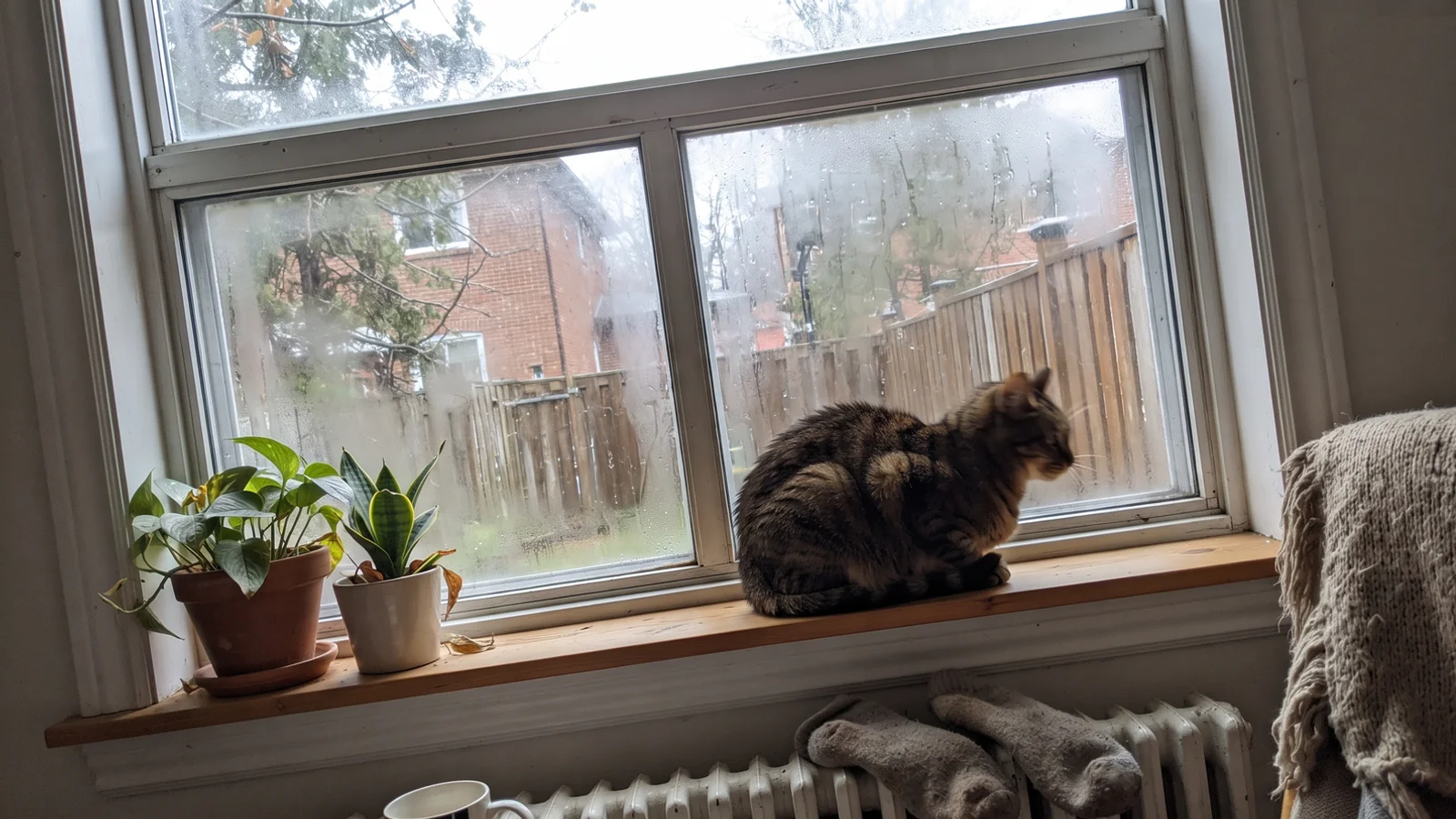
Condensation on the inside surface in winter
This one usually isn’t the window. Interior surface condensation means indoor humidity is high relative to the glass temperature. Better glass, meaning a higher condensation resistance (CR) rating, helps, but so does managing humidity. We’ll tell you which is actually your issue.
What About “Defogging”?
You’ll see services offering to drill a failed unit, dry it out and fit a vent. It clears the visible haze for a while. It does not restore the perimeter seal, does not restore the argon fill, and leaves the cavity permanently vented to outside air, so the insulating performance stays degraded and the haze often returns.
We don’t offer it. Replacing the sealed unit costs more up front and is the fix that actually lasts.
Book a Diagnosis Visit
We come out, confirm opening by opening whether the seal has genuinely failed, check the frame and hardware condition, and give you both numbers in writing: repair and replace. There’s no charge for the assessment and no pressure toward the bigger job.